
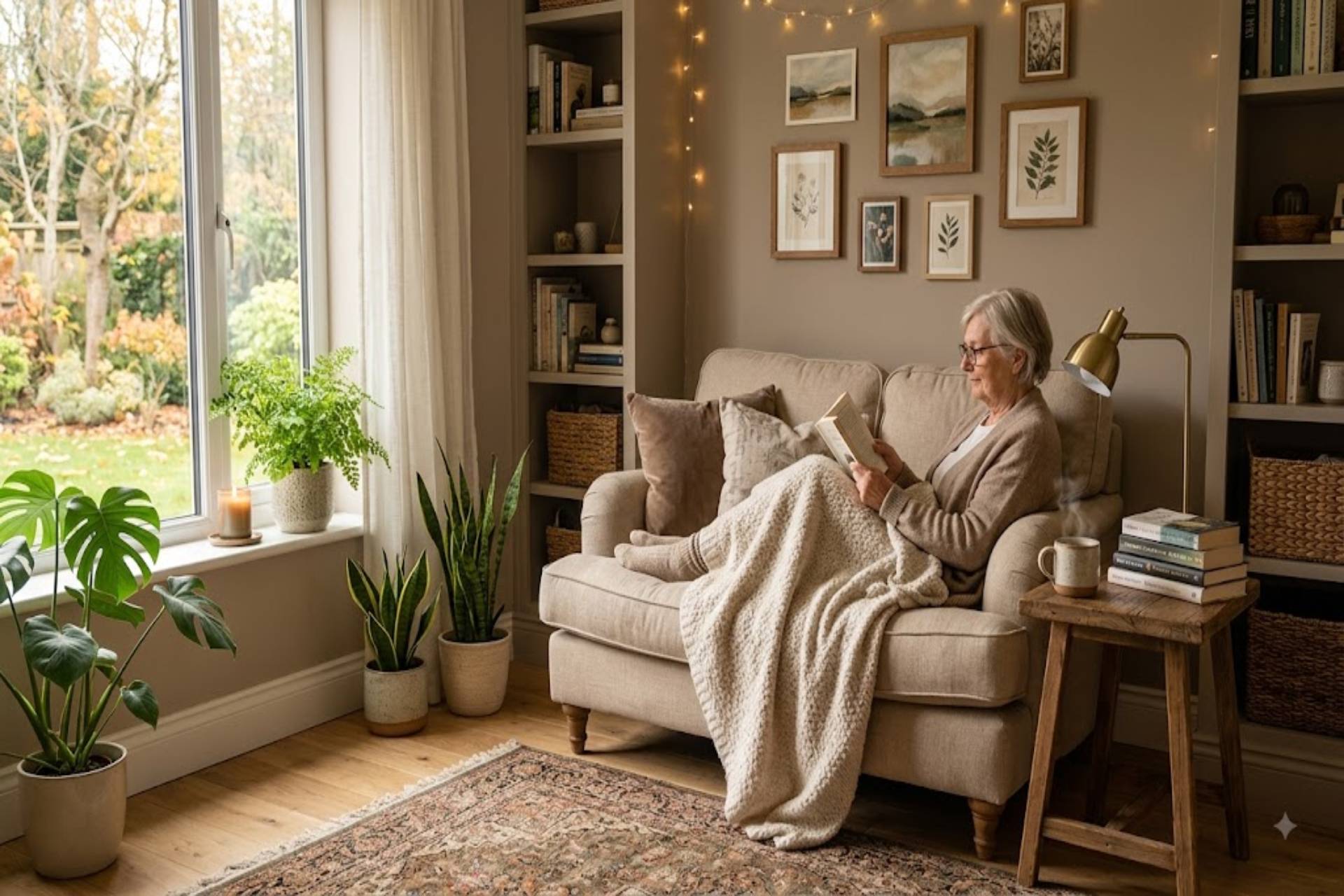
In a fast-paced world filled with digital noise and endless to-do lists, the home should serve as a sanctuary. Yet, full room renovations are not always practical or necessary to cultivate a sense of peace. Often, all it takes is a single, thoughtfully designed nook—a cozy corner—to shift the energy of your entire living space.
Whether you reside in a spacious house or a compact city apartment, creating an intimate personal retreat offers a dedicated zone to step back, slow down, and recharge.
The Psychology of Emotional Design
Why do small, enclosed spaces feel so comforting? In interior design, this relies on emotional design—the practice of shaping environments to support mental wellness and emotional balance.
A dedicated quiet zone signals to your nervous system that it is time to transition out of “work mode” or high-alert states. When you sit in a space specifically curated for rest, your brain associates those physical cues with safety and calm.
Core Mental Benefits of a Personal Retreat
- Stress Reduction: Lower sensory input allows your mind to decompress after long periods of screen time.
- Mindful Intentionality: Having a dedicated spot for reading, journaling, or meditating helps establish consistent self-care habits.
- Boundary Setting: In open-plan layouts, a cozy corner establishes visual and functional boundaries without requiring structural walls.
Key Design Elements for Ultimate Comfort
Building a functional nook requires more than throwing a cushion in a corner. It relies on a balance of tactile textures, gentle illumination, and smart spatial arrangement.
1. Tactile Layering and Fabrics
Comfort begins with touch. Mixing different fabric weights and weaves adds depth and warmth:
- Base Layer: Start with an upholstered armchair, a thick floor cushion, or a padded window bench.
- Mid Layer: Add soft throw blankets in breathable natural materials like chunky knits, linen, or brushed cotton.
- Accent Layer: Layer plush cushions with varying densities—firmer pillows for lumbar support and softer ones for lounging.
2. Warm, Layered Lighting
Avoid harsh overhead lights, which stimulate alertness rather than relaxation. Instead, build a warm lighting scheme around 2700K to 3000K warm-white bulbs.
- Task Lights: Use a floor lamp with an adjustable neck or a wall-mounted sconce for reading.
- Ambient Glow: Incorporate small table lamps, dimmable LED strip lights, or flameless candles to create a soft, inviting atmosphere during the evening.
3. Calming Color Palettes
Colors directly influence mood. For a restorative retreat, lean into tones that quiet the mind:
- Muted Earth Tones: Soft sage greens, warm terracottas, and taupe ground the space.
- Soothing Neutrals: Cream, warm alabaster, and soft beige feel light without looking sterile.
- Deep Restorative Shades: Deep navy, forest green, or charcoal work exceptionally well in dark corners to create a cocoon-like environment.
Finding Space in Small Homes
You do not need an entire spare room to design a personal retreat. Unused architectural nooks exist in almost every home with a bit of creative layout planning.
| Unused Area | Transformation Idea | Key Furniture / Accessories |
| Under-Stair Alcove | Built-in reading nook or quiet workspace | Custom bench cushion, floating bookshelves, plug-in sconce |
| Bedroom Corner | Solitary reflection or journaling spot | Compact accent chair, small side table, textured throw rug |
| Deep Window Sill | Sunlit window seat | Custom seat pad, bolster pillows, sheer privacy curtains |
| Unused Closet | “Cloffice” or mini meditation space | Wall-mounted fold-down desk, floor cushions, warm backlighting |
Personalizing Your Sanctuary on a Budget
Creating a cozy corner should be an accessible project, not a financial burden. Thoughtful styling with meaningful items brings character without high costs.
- Bring Nature Inside: Potted plants like pothos, peace lilies, or snake plants improve indoor air quality and add living texture.
- Display Sentimental Décor: Keep a small stack of favorite books, a framed photograph, or travel mementos nearby.
- Thrift and Repurpose: Upcycle vintage wooden stools to serve as side tables, or refresh an old chair with a soft slipcover.
- Seasonal Refresh: Swap heavy wool blankets for breezy linen throws in the summer, or add warm spiced scent diffusers during winter months.
Common Questions
What is the best lighting color temperature for a cozy corner?
A warm-white light between 2700K and 3000K is ideal. This soft spectrum mimics sunset tones, promoting relaxation and helping your body wind down in the evening.
How do I make a cozy corner in a very small apartment?
Utilize vertical space and multi-functional furniture. A small armless chair paired with a wall-mounted floating shelf creates a cozy reading nook without taking up valuable floor space.
What are the most durable fabrics for a cozy reading nook?
Natural blends like cotton-linen, velvet, and brushed canvas offer a balance of soft texture and long-term durability for daily use.
How can I make a dark room corner feel inviting?
Layer warm lighting sources, such as a floor lamp and LED candles. Paint the accent wall a rich tone like deep forest green to embrace a cozy, cocoon-like atmosphere.
How do I keep a cozy nook clutter-free?
Use multi-functional furniture with built-in storage, such as a storage ottoman or a bench with lower shelving, to keep extra blankets and books tucked away neatly.
The Takeaway
Designing a cozy corner is an investment in your daily well-being. By combining tactile fabrics, soft warm lighting, and intentional color choices, you can turn any forgotten architectural spot into a personal retreat. Whether you use your nook to read, meditate, or simply enjoy a quiet cup of tea, these small sanctuaries offer a ground for calm and everyday comfort inside the home.